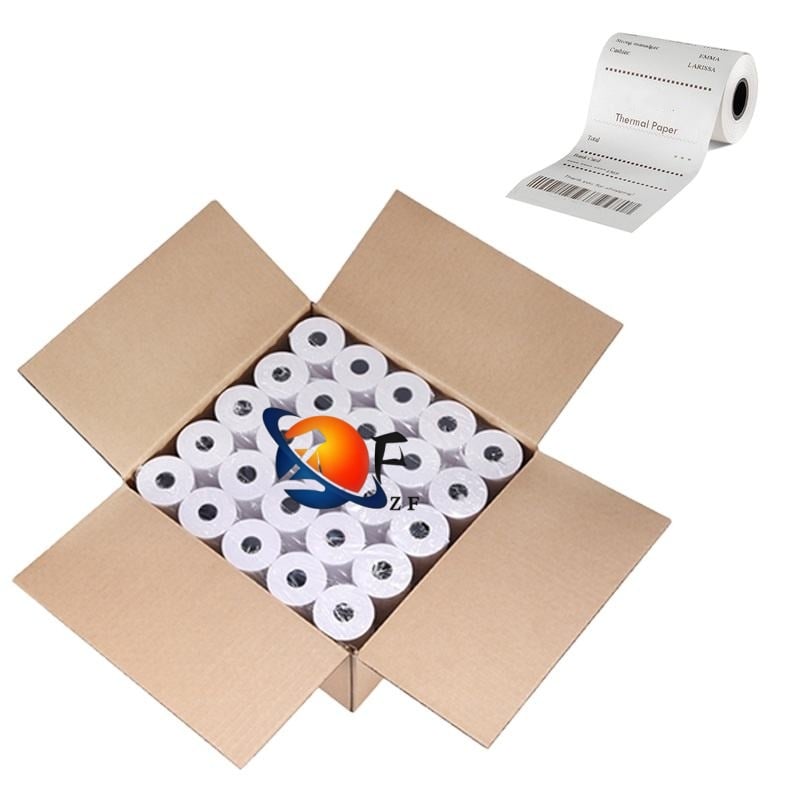
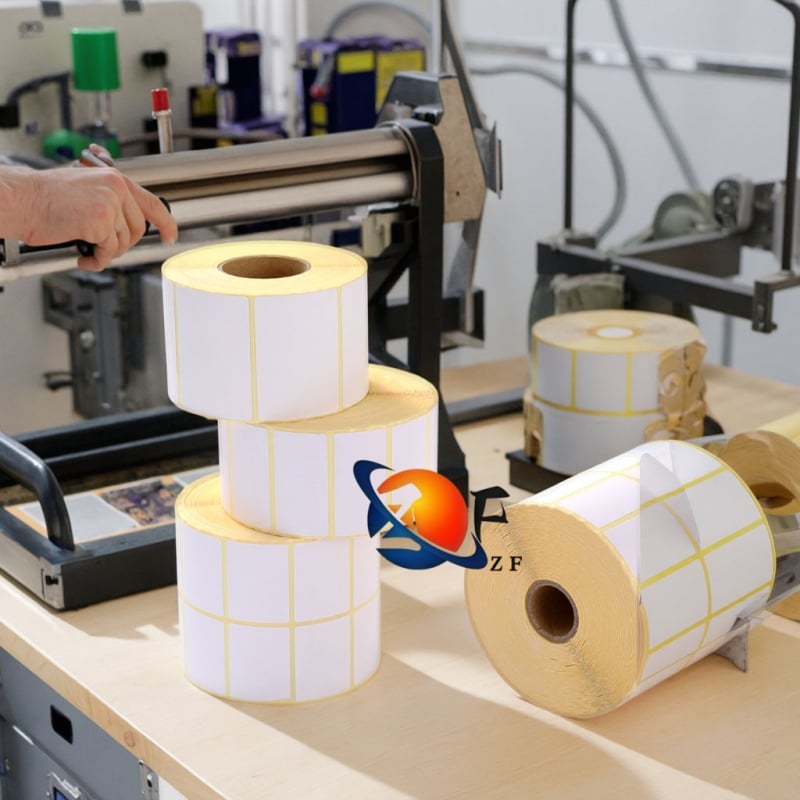
Today, we finished packing a batch of 100mm × 150mm thermal shipping labels for a logistics customer in Uganda.
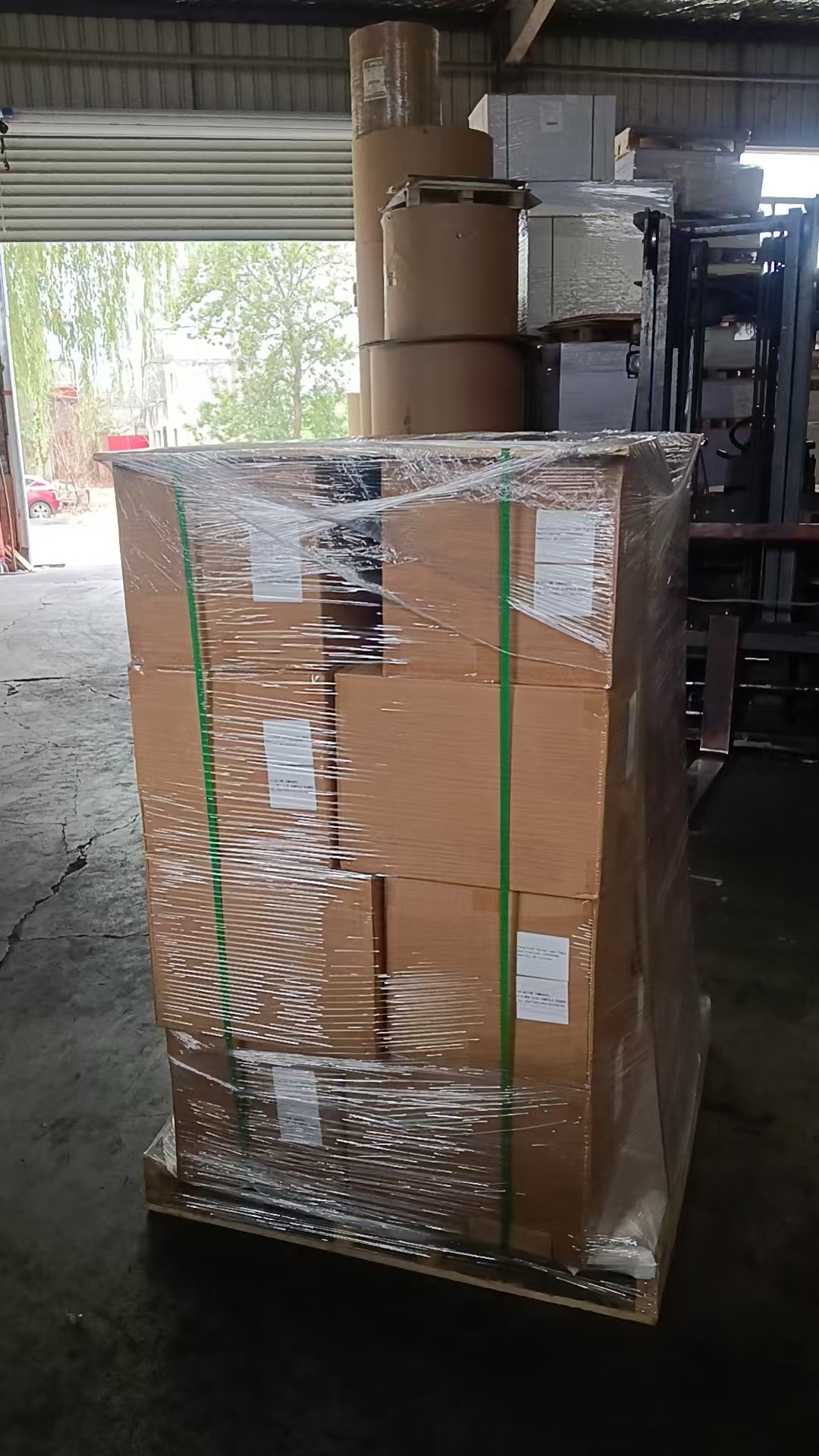
The photo below was taken in our warehouse just before loading. The labels had already been packed into export cartons, wrapped with stretch film, and secured on pallets. We always take a few photos at this stage because once the goods leave the warehouse, it becomes much harder to document the packing condition.
What they needed was actually very straightforward:
The labels had to be 100×150mm.
They would be used on parcels and shipping cartons.
The printing needed to work smoothly with direct thermal printers.
Barcodes had to remain clear enough for scanning during transportation.
For logistics companies, reliability is usually more important than fancy specifications. A label that feeds smoothly through the printer and scans correctly every time saves much more money than a slightly cheaper label that causes reprints or scanning problems.
We receive many inquiries for 100×150mm labels, especially from courier and warehouse businesses.
One reason is compatibility. This size works with many desktop thermal printers used for shipping labels, and it provides enough space for:
Shipping addresses
Tracking numbers
Barcodes
Warehouse information
Customer details
In cross-border logistics, a larger and clearer label usually reduces scanning errors.
During production, the customer specifically asked us to pay attention to the adhesive performance because some parcels may be stored in warehouses for several days before delivery.
For this order, we used an adhesive suitable for cartons and common packaging surfaces. Before shipment, we also checked several rolls from different cartons to make sure the winding and label release were consistent.
Many buyers focus only on the label itself, but export packing is equally important.
A damaged carton can create unnecessary claims even when the labels inside are fine. That is why we reinforced this shipment with:
Stretch film wrapping
Plastic strapping
Strong export cartons
Palletized loading
For shipments to Africa, we generally prefer pallet packing because it provides better stability during handling and sea transportation.
Over the past few years, we have noticed more inquiries from East African markets for thermal shipping labels.
As e-commerce and courier services expand, local logistics companies need a stable supply of labels for daily operations. The requirements are usually practical: clear printing, reliable adhesive, and consistent roll quality.
This Uganda order was a good example of that. The customer was not looking for a customized luxury product. They simply needed labels that could perform reliably in real shipping conditions.
Every shipment is a little different, but orders like this are becoming increasingly common. For logistics applications, 100×150mm thermal labels remain one of the most widely used formats because they balance printer compatibility, barcode readability, and operational efficiency.
If your business is looking for a reliable supplier of thermal shipping labels, feel free to contact Zhenfeng for specifications, samples, or bulk order information.
 Hot News
2025-07-31
2025-07-22
2025-07-09
2026-01-22
2026-01-19
2026-01-15

 EN
EN